
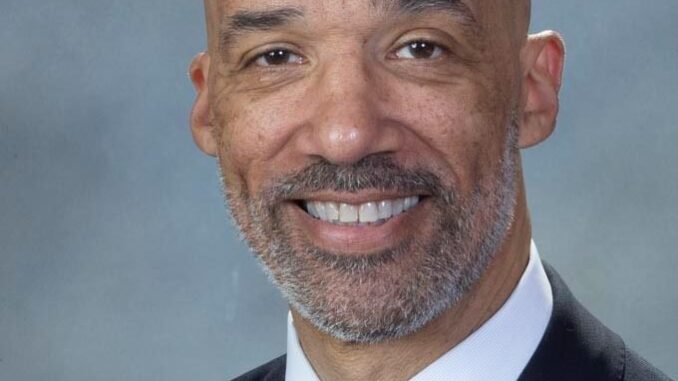

By Scott M. Davis
Over the course of the past several decades, proposals to redevelop the Nassau HUB — nearly 72 acres of prime undeveloped real estate situated in the heart of Nassau County —have been presented to the public with great fanfare.
To date, none of these proposals has been realized — not the Lighthouse Project in 2004; not RXR Realty’s proposal in 2018; and not the Las Vegas Sands casino and resort in 2023. In each of these examples, major developers imposed their ideas for a project onto county residents and the local communities instead of working in partnership with them. As a result, this top-down approach to development has generated significant community and political opposition, crucial factors leading to the cancellation of these projects.
With development currently stalled, we now have a tremendous opportunity to re-imagine the process. We have the opportunity for the county residents, developers, local educational institutions, community leaders and elected officials to work together to create and implement a comprehensive, 21st-century vision of the Nassau HUB from the ground up: a “community first” approach toward redevelopment, and a community vision that represents a generational opportunity to develop one of the last remaining large parcels of land in Nassau County.
This “community-first” plan should contemplate benchmarks that aim for tangible benefits to the county and local residents. It must expand our tax base so that we can preserve essential services without raising taxes —- and even possibly lower them. It must be an engine for economic revitalization as part of a comprehensive strategy for addressing Nassau’s longstanding affordability challenges. Designed correctly, it will become a destination for high-paying careers that will address the regional “brain drain” and equip our children with the opportunity to build their futures where they were raised.
This “community first” plan should be environmentally friendly and sustainable, with an emphasis on minimizing any adverse impact on the local environment, fostering walkable lifestyles, preserving green spaces, and utilizing renewable energy sources, such as solar power, wherever possible. Moreover, Nassau County must secure necessary infrastructure resources — whether through grants, contributions from the developer that is ultimately chosen, or a combination of both — to accommodate growth.
This community- first plan should also, most importantly, be built with union labor, and the developer that is ultimately selected must enter a project-labor agreement with the various trades to facilitate this outcome. It should generate livable wages commensurate with Nassau’s cost of living. With its central location, the Nassau HUB benefits from bordering major population hubs such as East Meadow, Uniondale and Hempstead Village. It is a short distance from the Meadowbrook Parkway, Hofstra University and Nassau Community College. All of these assets create excellent synergies that can amplify the success of this development.
Far too often, attempts to build Nassau County’s future have been doomed by bureaucracy, political infighting and NIMBY roadblocks. This was especially true in the case of the Lighthouse project, in which the developer and the Town of Hempstead’s adversarial relationship quickly sunk any hopes of achieving common ground. Success at the HUB will require leadership, and an all-hands-on-deck approach that prioritizes communication, good-faith negotiations, and a shared commitment to approving a final project that is focused on uplifting the communities we serve.
Since the closure of Mitchel Field in the early 1960s and the transfer of the land to Nassau County, we have had a tremendous opportunity within our grasp. There have been countless visions for redeveloping the site. For more than six decades, however, proposals have come and gone, and Nassau has not taken full advantage of this remarkable resource.
That is why it is so important to embrace another approach to the Nassau HUB — and that is why what I offer here is a deliberately broad framework. Ultimately, the future of the Nassau HUB must not be about what I, or any other elected official or developer, wants. It’s about what our community wants. It is essential for their leaders to listen to them and fulfill their vision — and our conversation about building that future together is one that must begin right now.
Scott M. Davis (D-Rockville Centre) has served the communities of Legislative District 1 since 2024.