

By Hank Russell
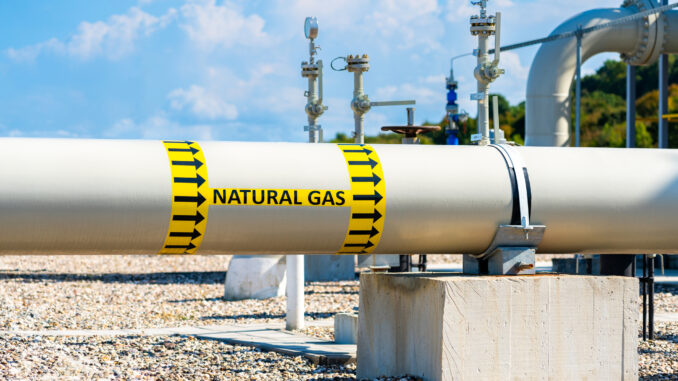
Controversy erupted after Governor Kathy Hochul signed a bill into law that shifts the financial burden of installing the first 100 feet of a gas pipeline from the ratepayers to the customer. While supporters said this will save utility ratepayers money by no longer having to subsidize hookups and help the environment, other said this will result in higher prices for ratepayers, who will turn to fossil fuels to heat their homes.
On December 19, Hochul signed into law a bill sponsored by state Senator Liz Kreuger (D,WF-Midtown Manhattan) and Assemblymember Jo Anne Simon (D-Carroll Gardens) that does away with the “100-foot rule.” Tommy John Schiavoni (D-Sag Harbor) cosponsored Simon’s legislation.
Hochul said it was necessary to eradicate the 100-foot rule because it was outdated and unfair to ratepayers.
“It’s simply unfair, especially when so many people are struggling right now, to expect existing utility ratepayers to foot the bill for a gas hookup at a brand new house that is not their own,” Hochul said. “I have made affordability a top priority and doing away with this 40-year-old subsidy that has outlived its purpose will help with that.”
Proponents of this new law said this will result in ratepayers saving $600 million a year. “Getting rid of the 100-foot rule means that New Yorkers will save money on their energy bills,” Liz Moran, New York policy advocate for Earth Justice, told Gothamist. She said the fees collected from the 100-foot rule “only benefits utilities and the gas industry.”
But detractors say the new law will do the opposite of what it claims to do.
In New York, the average customer spent more than $200 per month on electricity, according to the Center for Cost Effective Government. According to the think tank, that number will increase further as the New York State Electric and Gas Company said it would charge 23.7% more in 2026.
New York ratepayers pay some of the nation’s steepest power costs, according to the CCEG. As of May, the average monthly residential bill was up 13% over the previous year and 54% since May 2019, with energy prices roughly 33% above the national average. Further, residential customers paid more than 24 cents per kilowatt hour — about 50% higher than the U.S. average.
Nassau County Executive Bruce Blakeman — who is running against Hochul for governor — slammed her decision to sign those bills into law, saying it will raise New Yorkers’ electricity bills.
“Governor Hochul is making energy more expensive at every turn,” Blakeman said. “Thanks to Hochul’s decision to eliminate the long-standing 100-foot rule, families will soon face thousands of dollars in new costs just to get connected to natural gas.”
Assemblyman Keith Brown (R.C-Northport) echoes Blakeman’s sentiments.
“New York should be focused on realistic, balanced energy policy that protects reliability, affordability and consumer choice,” Brown said. “Forcing households away from natural gas before our electric grid is ready risks higher bills, reliability concerns and fewer options, especially for suburban and upstate communities. Preserving the 100-foot rule is about protecting affordability today while ensuring a responsible energy transition tomorrow.”
“From skyrocketing utility bills to crushing taxes, New York has become unaffordable on Kathy Hochul’s watch,” Blakeman added. “Her policies are driving up costs, reducing options, and making everyday life harder for families and small businesses alike.”