
By Hank Russell
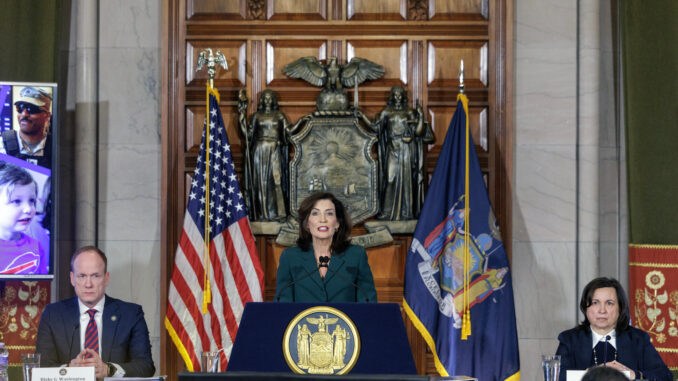
Governor Kathy Hochul presented the executive budget for Fiscal Year 2027 on January 20 which carries a price tag of $260 billion. In her budget, Hochul called for an increase in spending without hiking taxes. While she said this will save taxpayers money, others said more spending would damage the state’s finances.
In the budget, state operating funds proposed an increase of 5.7% from $148.8 billion to $157.4 billion. In addition, there would be an 11.4% increase in Medicaid spending, 4.3% more spending for school aid, 4.8% in additional spending for assistance and grants, 3.1% more spending for executive agencies, a 6.1% increase in spending for the judiciary, 5.8% more in spending for federal officials and 7.2% in additional spending for SUNY schools.
Hochul said these increases will be paid for with reserve funds. According to the governor, the Executive Budget projects State revenue collection to increase by 9.9% and FY27 all funds spending is projected at $260 billion, an increase of 0.7%. Hochul said she has prioritized maintaining the state’s reserves, which are currently at $14.6 billion for an unexpected downturn or “rainy day.” She also noted that the state has constantly maintained an AA+ bond rating.
The budget also aims to crack down on fraud to lower vehicle insurance rates for New Yorkers, reduce rising home insurance costs by increasing accountability and transparency for insurers and expanding automatic discounts for homeowners and housing providers who invest in damage mitigation measures for their homes or multifamily properties, and tackle utility costs by demanding strict fiscal discipline from utilities, empowering the State to fight more effectively for lower bills. The budget also aims to eliminate the New York State income tax on tipped wages, up to $25,000 per year. Under the governor’s proposal, the benefit will begin when New Yorkers file Tax Year 2026 returns.
“Every dollar in this year’s budget is being put to work to fight for families,” Hochul said. “While Washington tries to break our budget, we are making smart investments, protecting taxpayers and committing to delivering the services New Yorkers need most. Your family–and your future–is my fight. Together, with my partners in the Legislature, we will protect New York’s future and ensure it remains the best place in the nation to raise a family.”
However, there were those who blasted Hochul for proposing an unsustainable budget with runaway spending. Nassau County Executive Bruce Blakeman, who is running against Hochul for governor, said Hochul is giving taxpayer money to illegal immigrants.
“The migrant crisis isn’t paid for in Albany; it’s paid for at your kitchen table,” Blakeman said. “Billions spent on migrant housing, healthcare, and legal services show up as higher taxes, higher insurance premiums, and higher utility bills for families who are already struggling. That money could be cutting taxes, helping parents afford child care, or strengthening our schools. Instead, Hochul is spending it on the migrant crisis and making New York even more unaffordable.”
He also pointed out that there are no tax cuts in the budget. “Just as concerning, this budget does nothing to help everyday New Yorkers pay their bills,” he said. “There’s no income tax relief, no property tax relief, no utility cost relief — nothing that helps families and seniors keep up with the rising cost of living.”
Ryan Radulovacki, Hochul’s campaign spokesperson, shot back, saying Blakeman supported Trump’s tariffs, which cost New York families $2,024, according to data from the Joint Economic Committee Minority.
“Families in Nassau County and across New York see how the Trump economy is raising costs across the board, and they want a governor who’ll drive them back down – just like Governor Hochul has done, cutting middle-class taxes to their lowest levels in 70 years and putting money back in New Yorkers’ pockets,” Radulovacki said. “Bruce Blakeman will let Trump do whatever he wants, even when it hurts New Yorkers and raises their costs sky-high.”
But Assemblyman Daniel Norber (R,C-Great Neck) echoed Blakeman’s sentiments. “New Yorkers don’t need more government programs or temporary refunds; we need genuine, permanent tax relief, reduced spending and policies that prioritize public safety,” he said. “This budget fails to put money back in the pockets of hardworking, middle-class families and retirees, instead perpetuating the very policies sending them to Florida and Texas.”
Assemblyman Ed Ra (R-Franklin Square) said state spending has gone up by $81 billion over the past five years, with last year being the largest year-to-year increase since the Great Recession. “I’m skeptical that the governor’s budget does little more than provide window dressing on our state’s affordability crisis,” he said. “As budget hearings will soon begin, I look forward to learning more about how the governor plans to fund and pay for this massive budget proposal.”
“Despite a stated intention to address affordability, the executive budget is sorely lacking comprehensive measures that offer tangible relief to all,” Assembly Minority Leader Will Barclay (R,C-Pulaski). “The Division of the Budget identified $17 billion in additional revenue than originally estimated. Where is the direct relief for all New Yorkers? That money should be given back to taxpayers already burdened by high taxes, soaring energy costs and making ends meet in one of the least-affordable states in the nation.”
“Not only is this growth unsustainable, but it clearly demonstrates that bigger budgets do not translate into a lower cost of living,” Barclay continued.
Although he supported Hochul’s rejection of any tax hikes and her proposal to streamline the housing construction process, Empire Center Senior Fellow Bill Hammond expressed concern with the spending inside the budget.
“Unfortunately, her plan would also continue a pattern of excessive spending growth, especially an 11.5 percent increase in Medicaid,” Hammon said. “This being an election year, the state legislators will almost certainly push to hike taxes and increase spending even more. Taxpayers can only hope that the governor imposes a modicum of discipline.”
Norber said the budget “reeks of campaign-speak,” adding, “ She’s made the same promises and pledges for five years now, and nothing has changed – it’s only gotten worse. Her tax-and-spend playbook is how we got here in the first place.”
WHAT THE BUDGET ENTAILS
The governor has made affordable childcare a priority. Her budget would provide:
- $4.5 billion total statewide in child care and Pre-K services, including $1.7 billion in new investments statewide
- Over $3.2 billion in childcare vouchers statewide to address waitlists
- $500 million over two years for NYC’s 2-Care program
- $60 million to pilot child care programs in Broome, Dutchess, and Monroe Counties
In addition, the proposed Executive Budget would enhance and reform the Child and Dependent Care Credit, providing 230,000 filers with an average increase in benefit of $576.
For education, the budget lists the following expenditures:
- $1.6 billion for Universal Pre-K Aid in SY 2027, a $561M (53%) increase over SY 2026 levels
- $395 million for year two of the Universal Free School Meals program
- An expansion of back-to-basics learning to math: transforming math learning through quality instruction and professional learning
- $34 million for library construction grants
- An additional $90 million in support to maintain a tuition freeze for resident undergraduate students at SUNY and CUNY four-year colleges
- $12.5 million to expand our free community college program
The governor’s proposal ensures each school district will receive an increase in Foundation Aid, which she said would help to hold the line on property taxes.
The budget would also provide more funding for health and mental health services. This includes:
- $38.2 billion for New York’s Medicaid program, including $1.2 billion this year in federal funding generated through an assessment on Managed Care Organizations (MCOs) that will be disbursed to health care providers and programs, including hospitals, health clinics, nursing homes, assisted living programs, and more
- $1 billion in new capital and a minimum of $330 million in operating funds for the existing Safety Net Transformation Program to support transformative projects that promote financial sustainability and quality of care in New York’s safety net hospitals.
- $750 million in new health care resources to promote access to high quality services provided by hospitals and nursing homes
- $80 million to protect access to reproductive health care and to secure reproductive health centers
- $3.2 million to improve cardiac emergency preparedness by establishing regional centers of excellence for CPR training
- $17.5 million to expand the Teen Mental Health First Aid training to be available to all tenth graders in New York State
Hochul also pushed her “Let Them Build” agenda to expedite the construction of affordable housing by removing bureaucratic barriers to the building process. The Governor’s record $25 billion affordable housing plan promises to deliver 100,000 affordable homes across the state. Other funding includes:
- $100 million for the MOVE-IN NY homeownership program, which leverages innovative pre-fabricated technologies to build new homes twice as fast and at lower cost, helping more families move into high-quality starter homes
- $50 million for the Resilient and Ready program to help homeowners recover from and better prepare for extreme weather events
- $5 million for the Manufactured Home Park Revolving Loan Fund to finance improvements to critical infrastructure and upgrades for residents
- $50 million for the Housing Access Voucher Pilot Program (HAVPP), consistent with the four-year pilot, designed to provide rental assistance for housing vouchers for individuals and families who are homeless or who face an imminent loss of housing
- $40 million for the Homeowner Protection Program (HOPP) to provide legal assistance and housing counseling to help preserve homeownership and protect at-risk homeowners from foreclosure
- $20 million for lead abatement programs to protect tenants in areas of high risk outside New York City from lead hazards
- $153 million for the Homeless Housing and Assistance Program (HHAP) to provide capital funding for supportive housing
For public safety, the budget calls for the following:
- $352 million in gun violence prevention funding, of which $50 million is included for Law Enforcement Technology grants
- $4.5 million for a new Crime Analysis Center (CAC) in Westchester to reach complete statewide coverage
- $500,000 to address illegal homegrown guns, which is coupled with legislation to crack down on 3D-printed firearms and DIY machine guns
- $35 million for Securing Communities Against Hate Crimes (SCAHC) program to protect houses of worship and other vulnerable locations
- $77 million to continue the partnership with New York Police Department (NYPD) to increase police presence on subway platforms and trains
- $25 million to increase support for Subway Co-Response Outreach Teams (SCOUT) to engage individuals in crisis and connect them to care, treatment, or shelter
- $150 million in additional capital funding to complete the construction of a Statewide Emergency Operations Center
- $6.7 million to support upgrades to forensic laboratories across the state to solve crimes more efficiently
- $2 million to investigate and build criminal cases against auto insurance scammers and fraudsters
- $5.3 million in funding to establish a new Urban Search and Rescue capability
Hochul said she will also continue to protect the environment and provide money for the following initiatives:
- $3.75 billion five-year commitment to enhancing clean water infrastructure
- $425 million for the Environmental Protection Fund
- $200 million for ongoing parks capital projects
- $50 million for EmPower+ Program which helps homeowners save money on energy efficiency upgrades to their homes
- $33 million for the new Excelsior Power Program
- $20 million for upgrades to Denny Farrell Riverbank State Park
- $75 million for the Building Recreational Infrastructure for Communities, Kids and Seniors (NY BRICKS) capital grant program to support municipalities and nonprofit organizations in developing community centers that promote physical health, mental well-being, and community connections for youth and older adults.
- $7 million for projects celebrating the 250th anniversary of the American Revolution
- $15 million for dairy industry modernization grants
- $30 million for tariff relief funding to directly support our farmers
More money would also go into public transportation. This includes:
- $8.6 billion in total operating aid for the Metropolitan Transportation Authority (MTA)
- $50 million in funding to design a reimagined Jamaica Station for subway, LIRR, and AirTrain riders
- $25 million to begin preliminary engineering and design to extend the Second Avenue subway tunnel westward across 125th St to Broadway
- $1 billion in operating aid for Non-MTA Public Transit Systems
- $6 billion for the fifth year and final year of a record $34.4 billion DOT Capital Plan which includes:
- $1.4 billion for local roads and bridges
-
- $648 million for the Consolidated Local Street and Highway Improvement Program (CHIPS)
-
-
- $140 million for the State Touring Routes Program
-
-
-
- $100 million for the Pave Our Potholes Program
-
Additionally, the budget calls for an increase in economic development. The list includes:
- $400 million for the NY Works Economic Development Fund
- $100 million for a second round of the Promote Opportunity with Electric Readiness for Underdeveloped Properties (POWER UP) Fund to create power-ready sites for advanced manufacturing
- $200 million for the Downtown Revitalization Initiative and NY Forward
- $150 million for another round of the Regional Economic Development Council (REDC) program
- $25 million to establish a new Semiconductor Chip Design Center that links the downstate knowledge economy to upstate manufacturing
- $10 million to launch the Governor’s Manufacturing Modernization Program to support the state’s small and mid-sized manufacturers
- $50 million for the County Infrastructure Grant Program
- $100 million for the Quantum Research and Innovation Hub at SUNY Stony Brook
- $60 million to establish four additional Quantum Technology Commercialization Hubs across the state, which will be regional anchors for quantum innovation and high-tech start-ups
- $65 million for the Bolstering Biotech Initiative to make New York the epicenter of life sciences innovation
- $10 million for the Saving Performing Arts and Cultural Experiences (NY SPACE) program which will provide grants to help nonprofit performing arts organizations acquire venues
- $100 million for grants administered by the New York State Council on the Arts
- $300 million in funding to support economic development and revitalization projects in the City of Rochester and Monroe County, including $75 million for the creation of a new High Falls State Park in Rochester
- $6 million for NY Kicks which aims to continue the momentum from the FIFA World Cup 2026 soccer tournament by building lasting infrastructure for outdoor youth recreation and funding programming, equipment, and training to maximize use of these new facilities
Lastly, the budget increases spending for food assistance programs. Among them:
- $66 million for the Hunger Prevention and Nutrition Assistance Program (HPNAP) to expand funding to the State’s network of regional food banks and emergency food providers
- $55 million for the Nourish NY Program
- $10 million to combat food insecurity through NY PLATES, a new capital grant program for food pantries, food banks, and other hunger prevention organizations
- Upgrading New York’s EBT cards to secure chip-based technology that makes cards virtually impervious to mass skimming of Supplemental Nutrition Assistance Program (SNAP) benefits, which will protect New Yorkers from this predatory behavior while the federal administration tries to strip SNAP benefits from as many New Yorkers as possible and turns a blind eye to criminals taking food from vulnerable families