

Previously Published in The Messenger
By Madison Warren
This week, Islip Town Supervisor Angie Carpenter (R-West Islip) delivered the annual State of the Town address, reflecting on the progress the Town of Islip has made in recent years while looking ahead to future initiatives and goals.
During the address, Carpenter discussed a variety of issues important to Islip residents and employees, including infrastructure improvements, economic development and job creation, upgrades to parks and recreation facilities, expansion at Long Island MacArthur Airport, and environmental initiatives such as shellfish restoration and solar energy.
Carpenter began the speech by recognizing the importance of the Town of Islip to Suffolk County and reflecting on the town’s long history. Since the Town was first founded by William Nicoll 343 years ago, she noted that Islip has continued to grow and evolve, becoming bigger and better with each generation. In the 2020 Census, 340,000 residents were recorded – the third-largest municipality in the state by population.
The Supervisor also thanked members of the Town Council for their support in helping guide the growth of the Town of Islip and for working together to make thoughtful decisions that shape the community. Council members Jorge Guadrón (D-Central Islip), John Lorenzo (C-West Sayville), Mike McElwee (R-West Islip), DawnMarie Kuhn (R-Bohemia), Town Clerk Linda Vavricka (R-West Islip), and Receiver of Taxes Andy Wittman (R-Sayville) were recognized for their leadership and continued commitment to improving all aspects of the town.
When discussing what a great few years the Town has had in terms of improvements, Carpenter credits working together as a community to see real results, which is why she is proud of the town’s Comprehensive Plan, something the town hasn’t seen in fifty years. The invitation for residents to be a part of the conversation in person at meetings as well as offering opportunities online, which offers a blueprint for how the town should grow and develop in the future.
Town Hall Annex
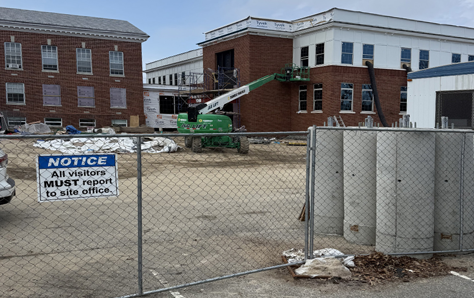
One of the major projects that have taken place this year has been the Town Hall Annex, which is still being constructed. The last time Town Hall has been expanded to this effect was back in 1970 when the population was at 279,000. Now that the population has grown at 20%, expansion is ready to happen. Carpenter says that this expansion will give residents a “one-stop shop” for all needs instead of having to go to different locations for different departments and services. A great update to the expansion is improving ADA accessibility, something Carpenter points out the building has lacked. The new annex has been financed with American Rescue Plan Act (ARPA) funds from the Federal Government after the pandemic.
“This is the kind of planning for our future that I am talking about. With this building, we are acknowledging that we are a growing, thriving Town that will need space to continue to grow and properly serve all our residents long into the future,” Carpenter noted.
Employees and Contracts
Supervisor Carpenter said one of the things she takes the most pride in within the Town of Islip is its employees. She highlighted the Town’s new contracts with unionized employees of the UPSEU as a major accomplishment this year, noting that these agreements have been a long time coming. Carpenter stressed the importance of providing fair wages and benefits to help attract and retain employees, which ultimately helps ensure the continued quality of services for residents.
From white-collar to blue-collar workers, the Supervisor said every employee plays an important role in keeping the town running. She made a point to recognize the workers in the Department of Public Works, Parks Department, DEC, and Public Safety departments, thanking them for their tireless efforts this past winter to keep the town safe and the roads clear and passable for residents.
Roadways and Finances
Over the past eleven years, the Town of Islip has invested nearly $100 million in paving more than 1,200 miles of roads throughout Islip. Carpenter noted that when she first took office, the annual paving budget was about $3 million, but it has since increased to $10 million.
During that time, the Town has also repaired more than 750,000 potholes and invested approximately $20 million into flood mitigation efforts, helping to address drainage issues and protect neighborhoods that have historically been prone to flooding.
Carpenter noted that when she first took office, addressing the Town’s finances and how money was being allocated became one of her top priorities. She explained that many areas of the town had been neglected due to poor financial planning in previous years. According to Carpenter, departments were underpaid and understaffed, while roads, parks, and other infrastructure had fallen into disrepair.
She said focusing on responsible budgeting and strategic investments has helped the town begin to turn those issues around, allowing for improvements in infrastructure, staffing, and public services across Islip.
The Town’s bond rating has stayed at Aaa with a stable outlook, the best bond rating a municipality can achieve and a designation that has been reaffirmed every year since 2016. Carpenter also highlighted the town’s Capital Budget Plan, which has been a top priority in addressing infrastructure needs while ensuring those investments do not place an additional burden on taxpayers.
Other results of the town’s strategic planning include the construction of a brand-new animal shelter, renovations to Roberto Clemente Park and Pool, improvements at Byron Lake Park and Pool, and upgrades to several senior centers. The Town has also added twenty pickleball courts and completed enhancements to multiple ball fields and golf courses, along with a number of other recreational improvements across Islip and more to come.
Natural Resources
Carpenter noted that Islip’s situation on the South Shore is a privilege and emphasized the importance of protecting the town’s waterways for both the environment and the enjoyment of residents and visitors who come to its beaches and marinas. One way the Town has worked toward that goal is through its bay bottom lease program and oyster hatchery.
Through the program, residents are able to lease sections of bay bottom to seed and farm oysters. In addition to supporting local aquaculture and businesses, oysters naturally help filter and clean the water, and many of the harvested oysters are later sold to local restaurants and seafood markets.
Now in the works is a new facility that will significantly increase the production of oysters and clams. The project will add an additional 15,000 acres of bay bottom available for the bay bottom lease program. This expansion is being made possible through a $10 million grant from New York State, which will help support aquaculture growth and continued improvements to the health of local waterways.
A pilot program designed to improve recycling in select garbage districts has also been implemented, resulting in a 35% increase in the collection of paper and cardboard. Officials say the program helps divert more recyclable materials away from landfills, which has a direct impact on improving the environmental health of the region.
MacArthur Airport
Long Island MacArthur Airport (ISP) has also seen significant improvements in recent years. Once losing money and, as Carpenter described it, “truly on life support,” the airport is now experiencing strong growth in both business and passenger traffic. Passenger numbers have increased by 16.7%, reaching a total of 803,771 travelers, with more than 1.6 million enplanements recorded.
The airport is now served by six different airlines and was recently ranked as the second-best small airport in the country in USA Today’s 10Best Survey, highlighting the airport’s continued growth and success.
There has also been considerable discussion about what comes next for the airport. A new North Terminal, funded through private investment, is currently being proposed as the next major step in the airport’s growth. Officials say the project would allow improvements to be made without disrupting current travelers while enhancing the airport’s overall operations.
The new terminal would also help reduce street congestion, avoid additional costs to the airport, and strengthen the airport’s role as a transportation hub, particularly with its connection to the nearby train station. Carpenter described the potential project as a major win for the Town of Islip and for travelers using ISP.
As the Town of Islip looks ahead, Carpenter said the focus will remain on responsible planning, continued investment in infrastructure, and protecting the quality of life that residents value. With ongoing projects and new initiatives on the horizon, Town officials say they remain committed to building on the progress made over the last decade while preparing the community for future growth.