

By Dr. Nicole Avena
Lawmakers in Nassau County are considering a ban on kratom. Their instinct to protect public health is right. But a blanket ban would be the wrong tool — and put Nassau County at odds with federal policy, multiple states, and scientific consensus.
Here’s the distinction that matters: not all kratom products are the same.
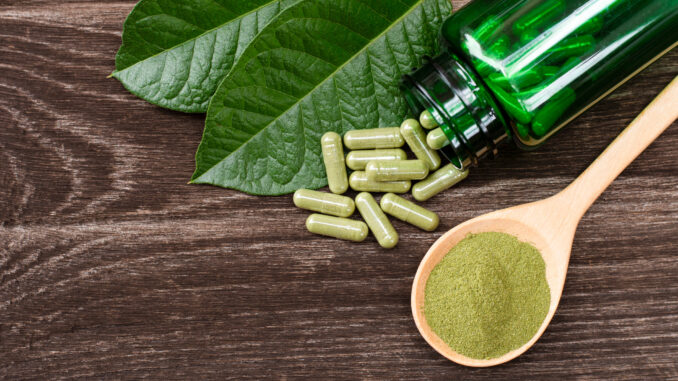
Natural kratom leaf comes from the Mitragyna speciosa tree and has been used traditionally for centuries. Millions of Americans use it today. The natural leaf contains only trace amounts — less than 0.04% by weight — of a compound called 7-hydroxymitragynine (7-OH). At those natural levels, federal regulators have concluded it presents minimal health concerns. Many adult consumers also report that natural kratom leaf supports overall well-being and quality of life when used responsibly, which is why millions have incorporated it into their daily routines.
The problem lies elsewhere. In recent years, manufacturers have begun isolating and concentrating 7-OH into synthetic products that contain roughly 100 times more of the compound than natural kratom leaf. These concentrated synthetic 7-OH products act like a powerful opioid — approximately 13 times more potent than morphine — and carry real risks of dependence, overdose, and respiratory suppression.
This is precisely why, in July 2025, the Food and Drug Administration (FDA) recommended that concentrated synthetic 7-OH products be classified as Schedule I substances under the Controlled Substances Act. FDA Commissioner Marty Makary was explicit about the distinction between lab-made synthetics and natural kratom leaf: “We are not targeting the kratom leaf or ground-up kratom. We are targeting a concentrated synthetic byproduct that is an opioid.” He further stated that natural kratom leaf products present “minimal health concerns.”
This was not a fringe position. FDA Commissioner Makary, Health and Human Services Secretary Robert F. Kennedy Jr., and Senator Markwayne Mullin (R-Oklahoma) were all aligned at the press conference. The Trump Administration’s MAHA Strategy Report also directed the FDA to “educate the public regarding the dangers of synthetic opioid products such as 7-OH — which is distinct from natural kratom.” President Trump himself highlighted the FDA’s action against concentrated synthetic 7-OH at his January 2026 press conference on combating addiction and substance abuse.
States have already acted on this federal public-health guidance. Florida Attorney General James Uthmeier issued an emergency order in August 2025, capping allowable 7-OH concentrations at 400 parts per million by dried weight — effectively removing synthetic concentrated products from shelves while leaving natural kratom leaf entirely unaffected. Kentucky, at the direction of Governor Ken Beshear, also adopted a 400 ppm ceiling.
Both states reached the same conclusion as federal regulators: The real danger lies in high-concentration synthetic isolates, not in the natural plant.
Nassau County should follow that lead — not contradict it. A blanket ban would eliminate a product that federal health officials have explicitly said they are not targeting, while doing nothing to address the actual synthetic opioid threat fueling legitimate concern.
The path forward is clear: Ban concentrated synthetic 7-OH products, cap allowable concentrations at 400 ppm (in line with Florida and Kentucky), require third-party testing and labeling, and restrict youth access. That is the approach the FDA recommended, the White House endorsed, and two states have already implemented.
Precise policy protects people. A blanket ban just drives them toward less regulated, more dangerous alternatives.
Nassau County has an opportunity to align with federal guidance and lead on smart drug policy. Lawmakers should take it.
Dr. Nicole Avena is a recognized expert in nutrition, diet, and addiction, with a focus on nutrition throughout the lifespan. She has conducted groundbreaking research creating models on food addiction and the dangers of excess sugar intake, earning numerous awards and publishing over 100 scholarly articles. Additionally, she has authored several popular books on sugar addiction, pregnancy nutrition, and healthy eating. She has made appearances on major TV programs and been featured in prominent publications. Her TED-Ed Health talk, “How Sugar Affects Your Brain,” is among the most-watched, with over 18 million views.